My trip to Poland: a pursuit of family, identity and heritage

by Katrina Houck
CIMBA Spring 2026 Alumn
Over spring break, I had the privilege to visit Warsaw, Poland, a place I knew so much about despite having never been.
Although my stay lasted only about forty hours, I spent that time immersing myself in the city’s cultural and historical landscape—visiting museums and monuments, exploring its streets, and experiencing traditional Polish cuisine. A close friend of mine from high school, who moved to Warsaw after graduation, met up with us and showed my friends and I around the city. Our friendship had been shaped by a shared connection to Polish heritage, making this experience particularly significant.
My connection to Poland is rooted in family history that extends back several generations. Although my family has lived in the United States for about four generations, my maternal great-great-grandparents emigrated from Poland to Pennsylvania in the early twentieth century. My great-grandmother, Nana, though born in America, was fully immersed in Polish culture and identity due to her parents. She later married my great-grandfather Pop, a Russian immigrant, and together they preserved their linguistic and cultural traditions by conversing in Polish and Russian. Although Pop passed away before I was born and Nana died when I was six, her legacy persists through both my own early memories and the stories shared by my mother and her siblings.
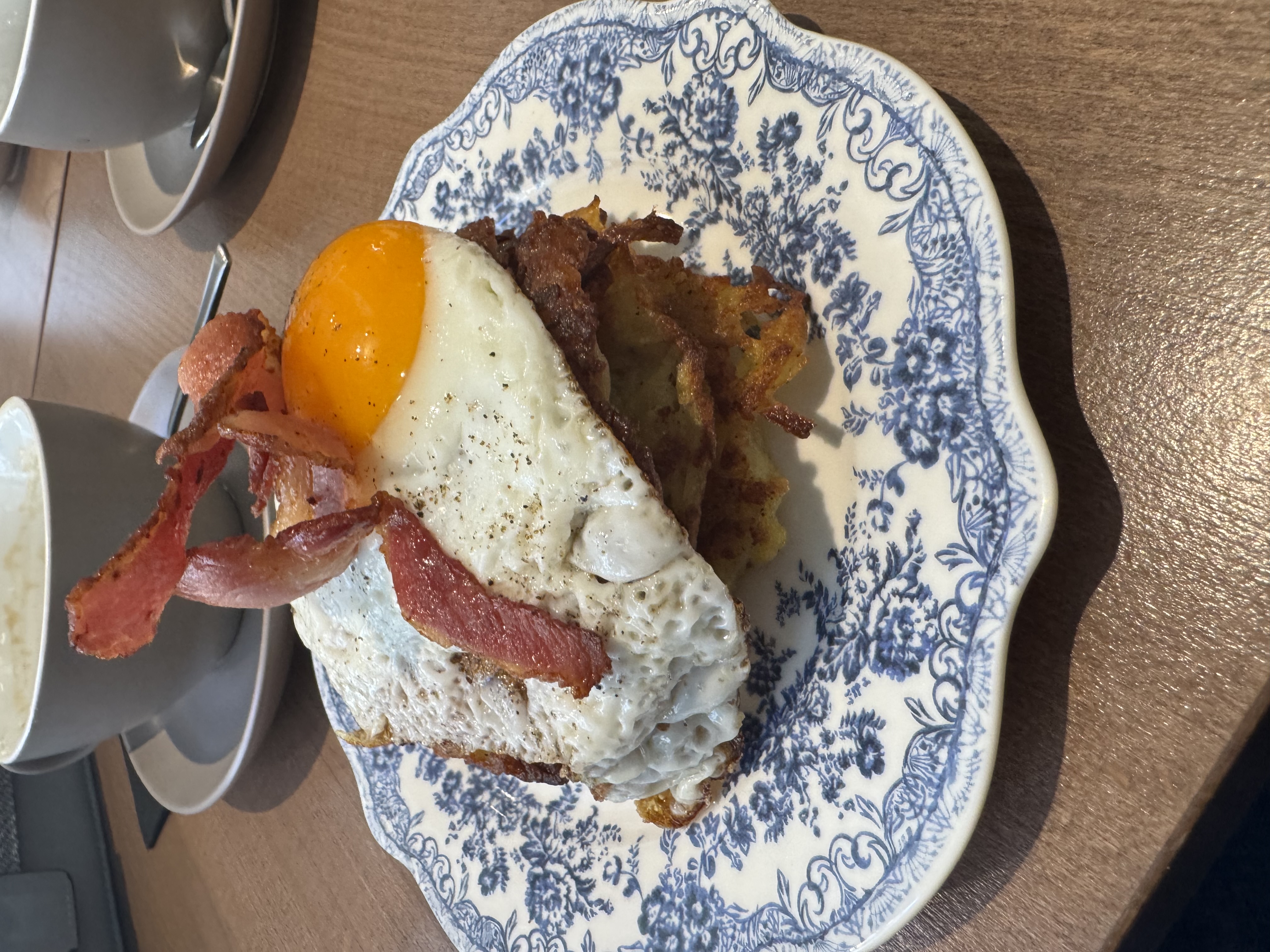
Nana played a formative role in shaping my family’s traditions, particularly for my mother, who viewed her as a source of stability and guidance throughout her life. As a result, many of our current customs serve as acts of remembrance and cultural continuity. Our major holiday meals feature traditional foods such as pierogi and bobalki, alongside other dishes that were central to Nana’s household. Visits to my family in Pennsylvania further reinforce these traditions, where I enjoy foods such as placki ziemniaczane—the Polish version of potato pancakes—deepening my connection to a heritage that has been maintained across generations.
Within this context, my visit to Poland carried both symbolic and emotional weight. Among my extended maternal family, I am the first to return to Poland since my ancestors emigrated, which I experienced as both a privilege and a source of internal conflict. On one hand, I felt honored to reconnect with a place so integral to my family’s identity. But on the other, I experienced a sense of guilt, given that I am the most generationally removed from our Polish origin. I also approached the trip with uncertainty, questioning how the Poland I had imagined through family narratives and traditions would compare to the contemporary reality. Ultimately, however, the experience was profoundly meaningful. Engaging directly with Polish culture—particularly through its food, history, and environment—allowed me to form a more tangible and personal connection to my heritage.
Looking forward, this experience will continue to shape my sense of identity and cultural engagement. I intend to carry forward a deeper appreciation for my heritage by learning to prepare traditional Polish dishes—both in the present and for my future family—and by maintaining a connection with my friend residing in Poland. More broadly, this visit has inspired me to return to Poland for a longer period, allowing for a more sustained and nuanced exploration of the country. In this way, my trip represents not only a reflection on the past and present, but also a foundation for continued cultural discovery in the future, as I want to continue to carry on my Nana’s legacy and raise my future children with an appreciation for Polish culture.