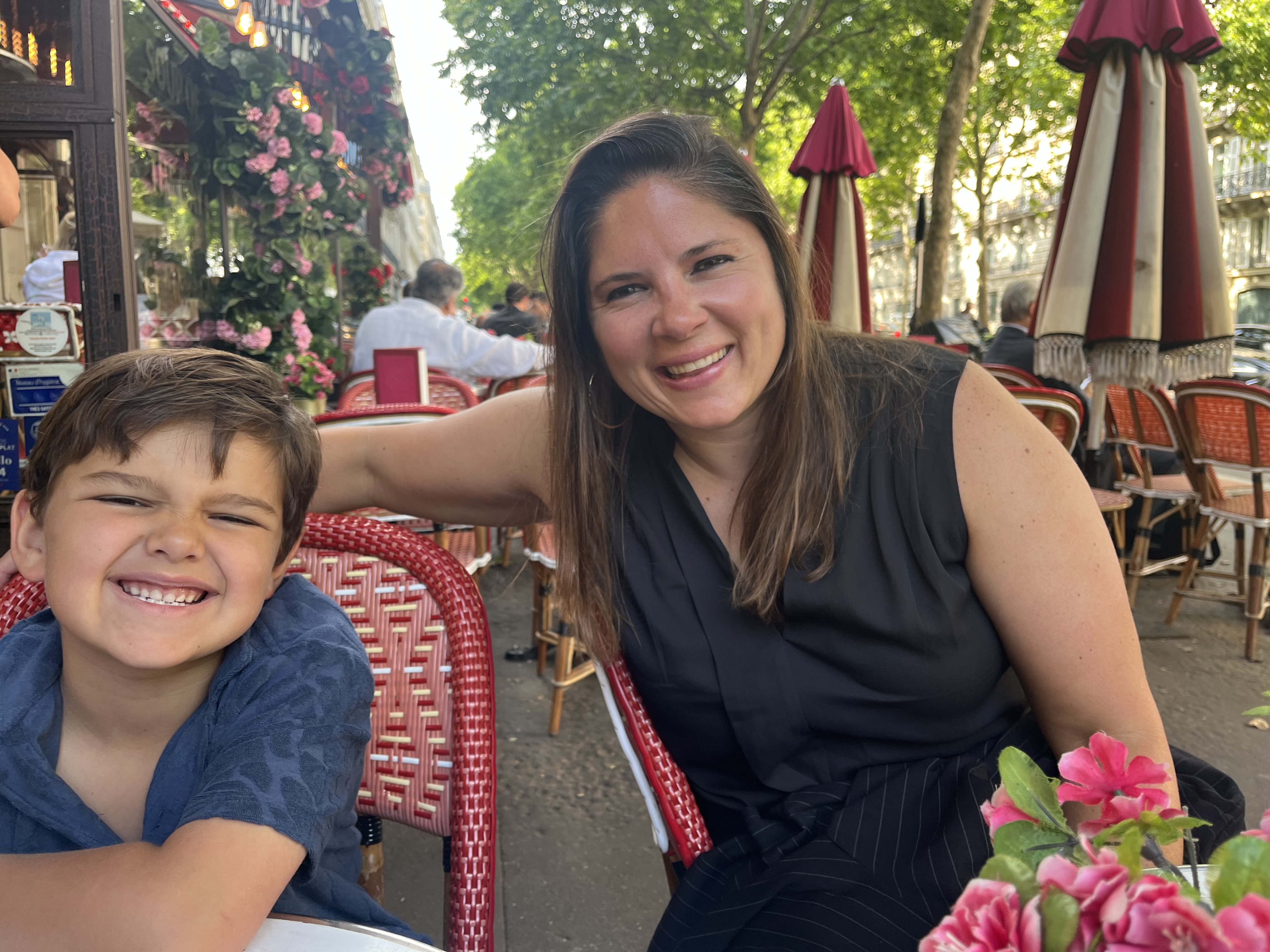
Erin Herman Spotlight

What do you reflect on with fondness from your time at CIMBA?
What I remember most about my time at CIMBA is how the world slowly unfolded before me, one day at a time.
I arrived in Italy as a student from Madison, Wisconsin who loved nature, community, and learning, but whose exposure to global cultures and international business was still fairly limited. What CIMBA gave me was something far greater than coursework.
It gave me perspective.
During that time, I traveled to places I had only read about and shared meals with people who spoke different languages, grew up in different cultures, and saw the world through entirely different lenses. And yet what struck me most was how quickly those differences faded when you simply sit down and talk with someone.
We connected.
We built friendships.
We learned from one another.
Those experiences shaped me in ways I couldn’t fully understand at the time. I wasn’t just studying abroad, I was expanding my view of the world and discovering the power of human connection.
Looking back now, I can see that my time at CIMBA sparked a deep curiosity about the world and the people in it. In many ways, it helped lay the foundation for the work I do today as a global entrepreneur and keynote speaker focused on leadership, culture, and human connection.
But the lesson that has stayed with me most from that time is simple:
No matter where we come from, people are far more alike than they are different.
And I first discovered that truth walking through cities, sharing meals, and learning alongside classmates during my time at CIMBA.
In a recent interview with Medium, you highlighted how good leaders constantly hold themselves accountable. That isn’t always easy. How do you navigate that effectively?
Leadership accountability is rarely comfortable, but it is always necessary.
The leaders I admire most are the ones who look inward first. They ask the hard question:
“What part of this is mine to own?”
Accountability isn’t about perfection. It’s about humility and awareness.
In my own leadership journey, I’ve learned that growth happens when we create space to reflect honestly, not defensively. When something doesn’t go well, I ask three questions:
• What did I miss?
• What did I learn?
• How will I lead differently next time?
That process builds trust with teams because people can feel when a leader is genuine.
Ironically, the moment a leader stops pretending to have all the answers is often the moment they become far more effective.
Accountability isn’t a weakness in leadership.
It’s the foundation of credibility.

You recently shared an article on the “Glass Ceiling Effect.” Are you seeing progress in the business world?
I do believe we are seeing progress, but progress rarely happens in one sweeping moment. It happens because women continue to show up, push forward, and expand what leadership looks like.
When I speak with women around the world, whether it’s in corporate boardrooms, entrepreneurial spaces, or leadership conferences, one theme comes up again and again: many incredibly capable women are still questioning whether they belong in the room.
And my answer to that is always the same.
You do.
The reality is that many women were raised to be collaborative, thoughtful, and inclusive leaders. Those qualities are not weaknesses; they are extraordinary leadership strengths in today’s complex world.
But too often women wait until they feel 100% ready before raising their hand.
Meanwhile, many of the opportunities I’ve had in my career came from stepping forward when I felt only 60% ready and learning the rest along the way.
To the women reading this newsletter, I would simply say:
Your perspective matters.
Your voice matters.
Your leadership matters.
The world needs more women who are willing to trust their instincts, take the seat at the table, and bring others with them as they rise.
The glass ceiling has cracked in many places.
But the next generation of women leaders won’t just break it.
They’ll build entirely new rooms.
What I tell audiences on this topic and I will share with you, confidence doesn’t arrive before action. It grows because of it.
What is your relationship with kindness in the workplace, and how has it evolved?
Earlier in my career, I believed kindness was simply a personality trait.
Over time and after working alongside extraordinary leaders across industries and around the world, I’ve come to see something different.
Kindness is actually a leadership discipline.
The strongest leaders I’ve encountered understand that performance and humanity are not competing priorities. In fact, they reinforce one another. When people feel respected and valued, they are far more willing to take risks, collaborate, and innovate.
Kindness builds trust.
Trust builds courage.
And courage is what allows teams to do remarkable work together.
That said, kindness is often misunderstood. It does not mean avoiding hard conversations or lowering expectations.
Some of the kindest leaders I know are also the most direct. They are honest. They hold high standards. They challenge people to grow.
But they do it in a way that preserves dignity.
In a world that can sometimes feel transactional and fast-moving, leaders who choose kindness stand out not because it’s easy, but because it requires intention.
Stay Connected
One of the things I value most about the CIMBA community is how global it truly is. Over the years I’ve had the chance to reconnect with alumni in unexpected places around the world, and it’s always a reminder of how powerful that shared experience in Italy really was.
If you’re a fellow CIMBA alum and our paths cross at a conference, leadership event, or somewhere in the world along the way, I would always welcome the chance to reconnect.
You can learn more about my work in keynote speaking, workshops, and consulting at TheErinHerman.com, or connect with me on LinkedIn.
After all, some of the best conversations begin with the simple realization that you once studied abroad in the same place.